


Which is the world’s most powerful art gallery?
Which is the world’s most powerful art gallery?

Alastair SookeThu, July 30, 2026 at 12:00 PM UTC
0
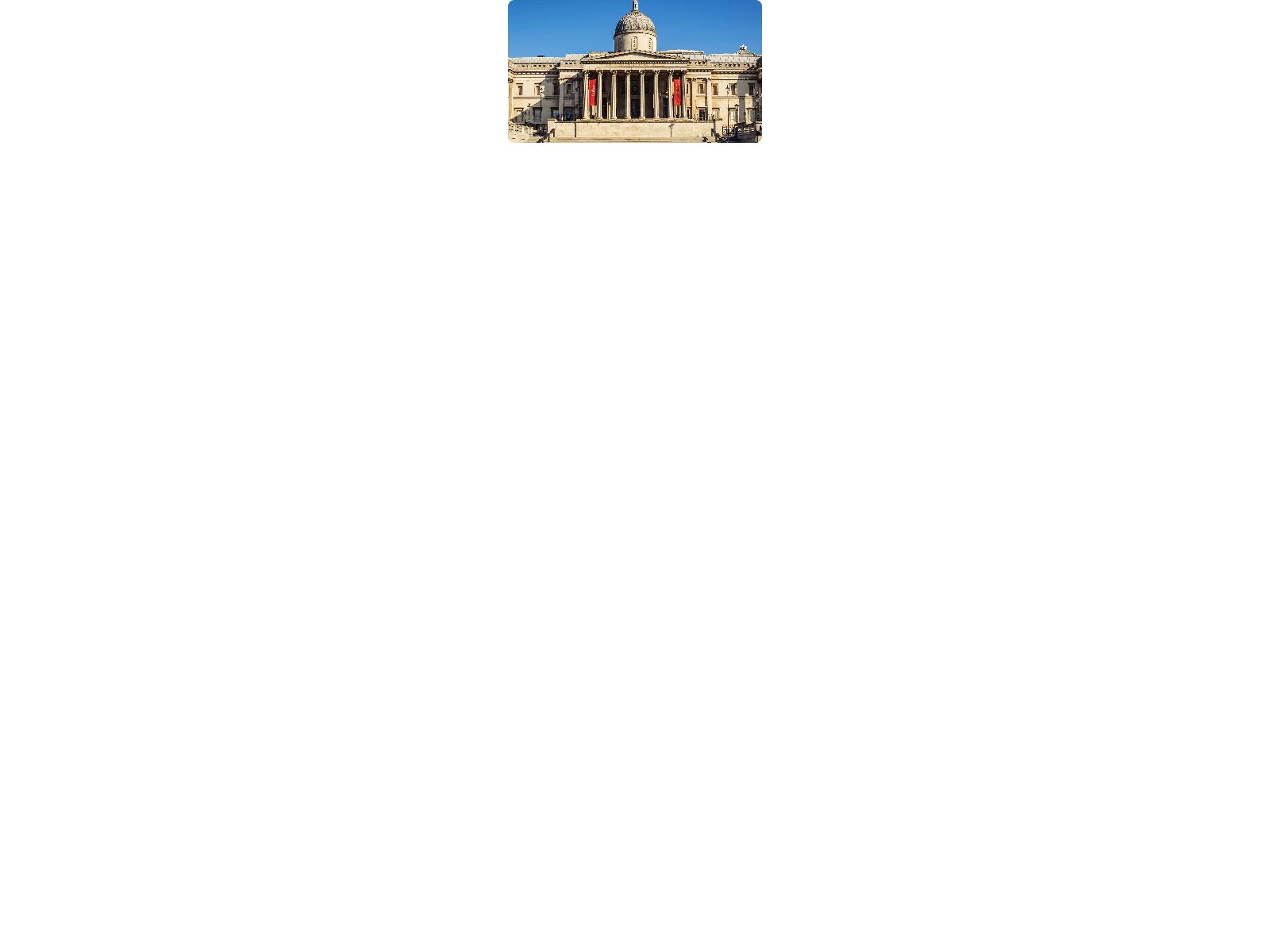
We live in an era of strongmen, according to political commentators – and, it seems, the same could be observed of museums internationally, as institutions with expansionist visions (and stockpiles of masterpieces) vie for dominance. Earlier this year, the National Gallery announced that Japanese architect Kengo Kuma would design a new wing as part of its £750m “Project Domani” (billed as the “largest and most significant transformation” in its history).
Under director Gabriele Finaldi, the gallery has displayed almost Trumpian levels of self-assurance. Another strand of Project Domani – for which nearly £400m has been secured – is the intention to start collecting paintings made after 1900, which has been interpreted as a two-fingered salute to Tate.
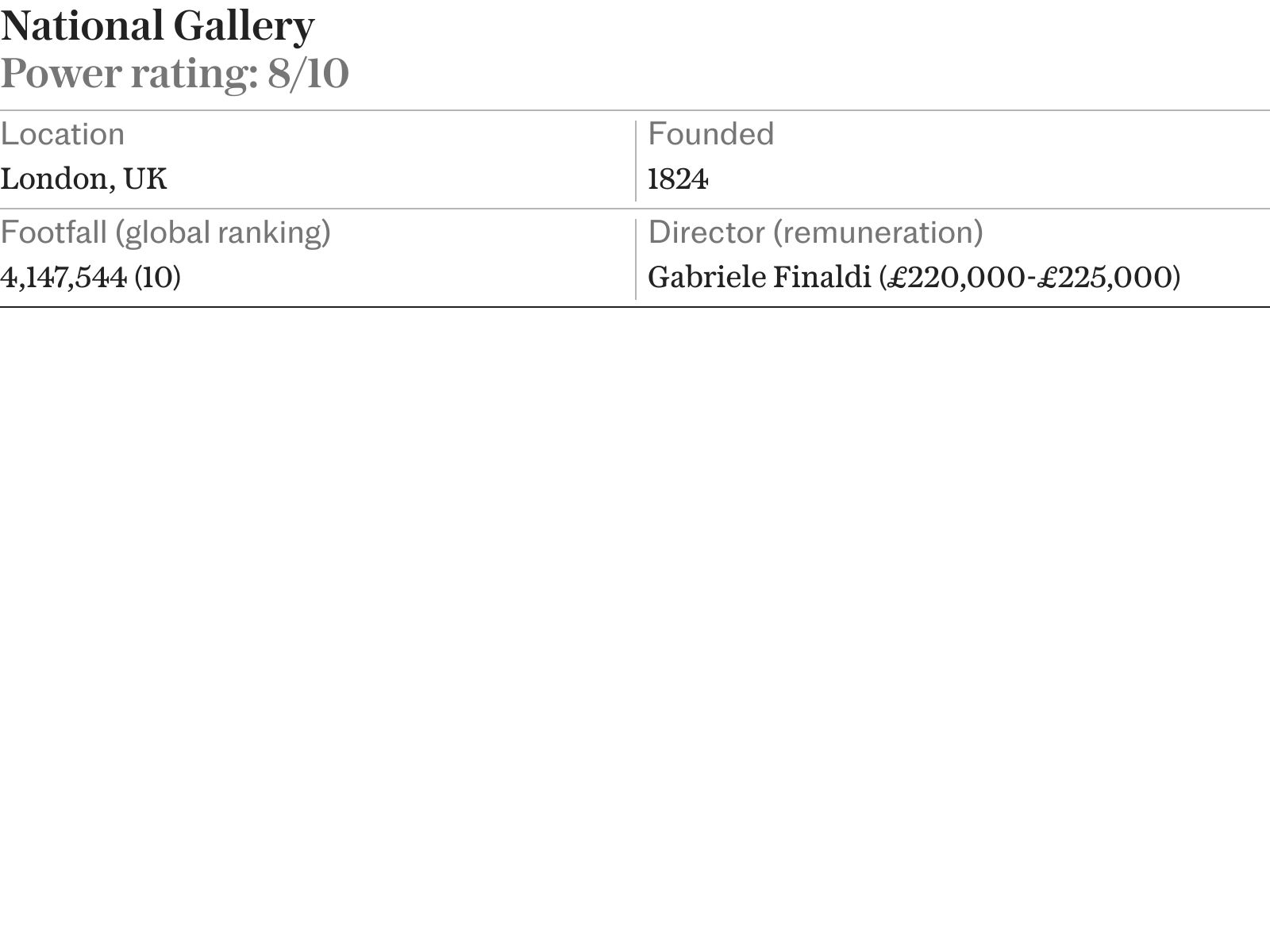
According to an annual survey compiled by The Art Newspaper, the National Gallery was the world’s 10th-most-visited museum in 2025, just behind Tate Modern, at number nine; the British Museum, which attracted 6.5 million visitors last year, was ranked at number six.
It’s worth noting that the list doesn’t include Beijing’s Palace Museum, which occupies the complex once known as the Forbidden City, and which supposedly attracts 17 million people annually. (Last year, it marked its 100th anniversary.) In part, this is because its status is a grey area: although it is an art museum, with a collection of more than 1.8 million objects (including ancient bronze ritual vessels, jade carvings, paintings and pieces of calligraphy), it is also a historic site, inhabited for half a millennium by 24 Ming and Qing emperors. In addition, reliable visitor numbers for China’s state-run museums are hard to come by.
Then there are the mega-museums in the Middle East (some of which have opened, while others remain in the offing). Many backers will be lamenting the Israeli-American war against Iran, although the Guggenheim Abu Dhabi will finally open in December after protests and delays.
Shiny new museums seemingly pop up somewhere or other every other week (last year, the $1bn Grand Egyptian Museum, situated a mile from the pyramids at Giza, finally opened after a two-decade-long saga), suggesting that cultural power may be shifting to the Global South. But, for now, the West still dominates, with British museums punching above their weight.
Advertisement
Here I have taken five of the world’s big hitters, and compared them on several factors, including their footfall, masterpieces and recent acquisitions.
Beata Zawrzel/NurPhoto via Getty
Masterpieces: Jan van Eyck, The Arnolfini Portrait (1434); John Constable, The Hay Wain (1821); Vincent van Gogh, Sunflowers (1888)
Recent acquisitions: Netherlandish or French, The Virgin and Child with Saints Louis and Margaret (about 1510); Floris van Dijck, A Banquet Still Life (1622); Eva Gonzalès, The Full-length Mirror (c1869-70)
Plans: Project Domani: the construction of a new wing and the expansion of the historic collection beyond 1900, as well as an endowment
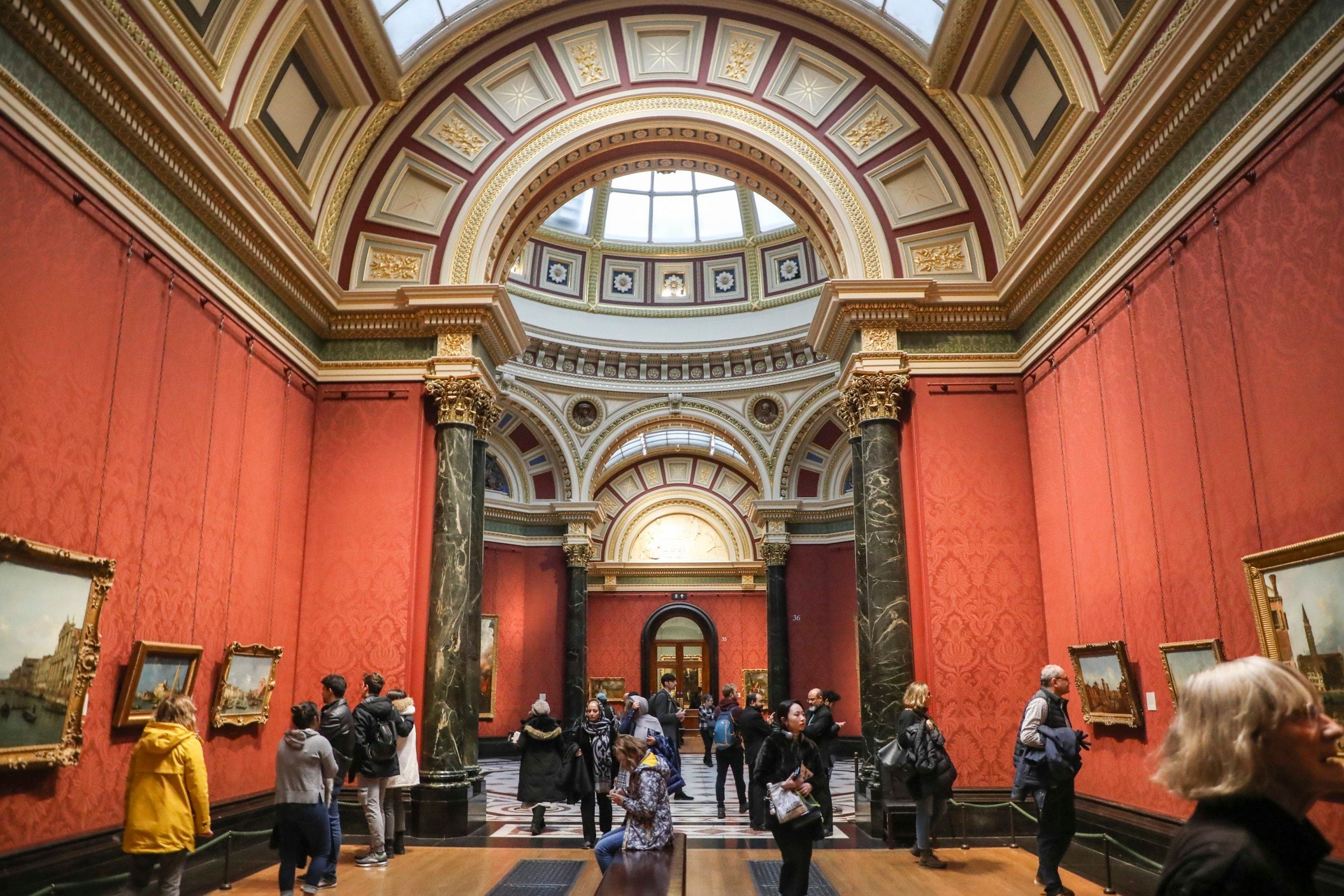
In recent years, the National Gallery, which began life in a Pall Mall townhouse, has achieved astonishing things – despite a relatively small collection of only around 2,400 Western European paintings. It dealt admirably with the challenges of the pandemic, and last year unveiled a refurbished entrance and full rehang before announcing plans for a new wing. It isn’t all plain sailing, however: post-pandemic visitor numbers could be higher, and in February the gallery initiated staff cuts, after announcing an anticipated deficit of £8.2m.
Antoine Boureau/Hans Lucas/AFP via Getty
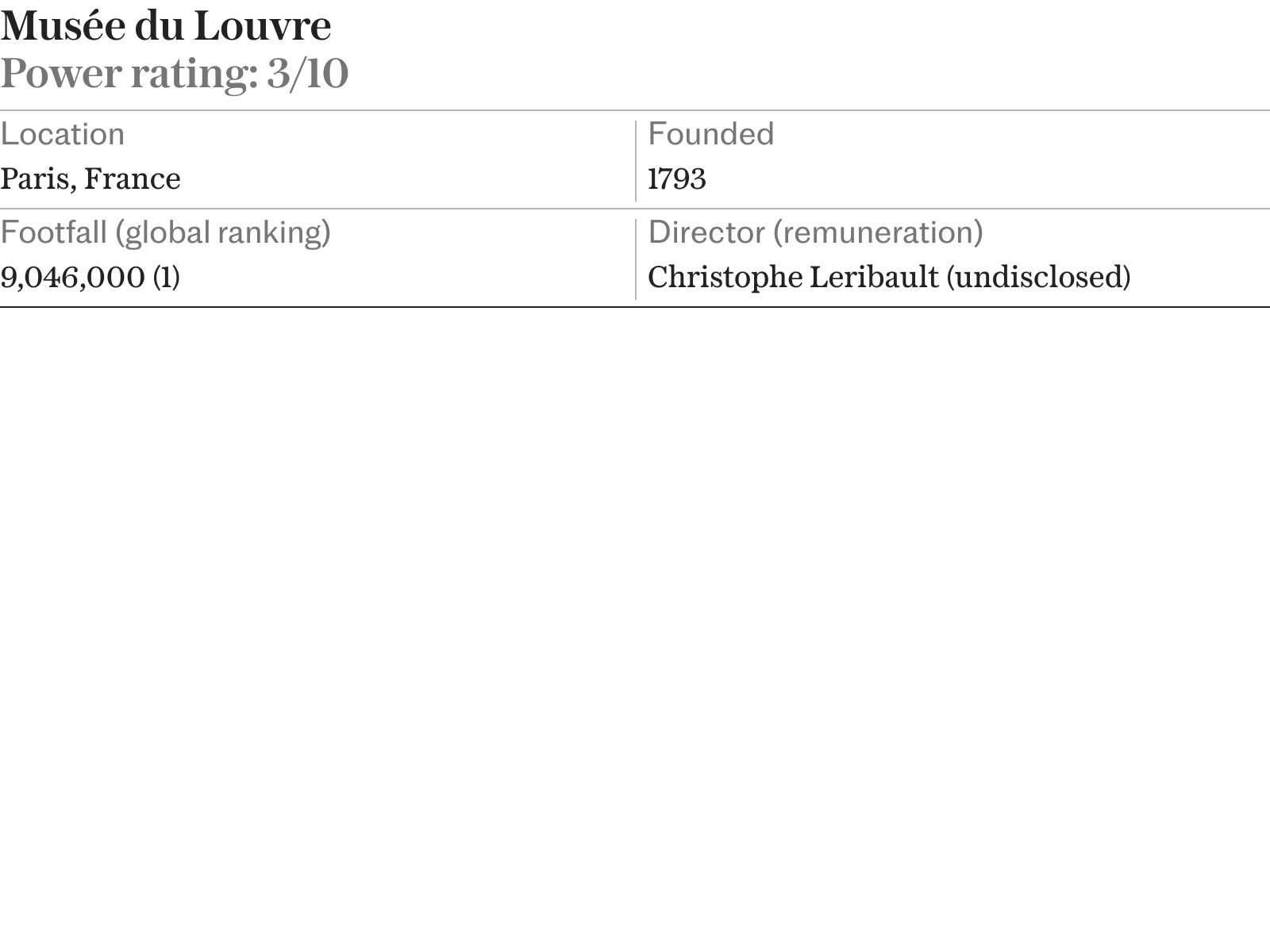
Masterpieces: Venus de Milo; Michelangelo’s Dying Slave; Leonardo’s Mona Lisa; The Raft of the Medusa (1818-19) by Théodore Géricault
Recent acquisitions: Les 4 Temps (2025) by French-Algerian photographer Mohamed Bourouissa, the first video artwork acquired by the museum
Plans: Now that former director Laurence Des Cars has gone, what will become of the 10-year “New Renaissance” masterplan, overhauling the building and creating a grand new entrance, announced last year by French president Emmanuel Macron?
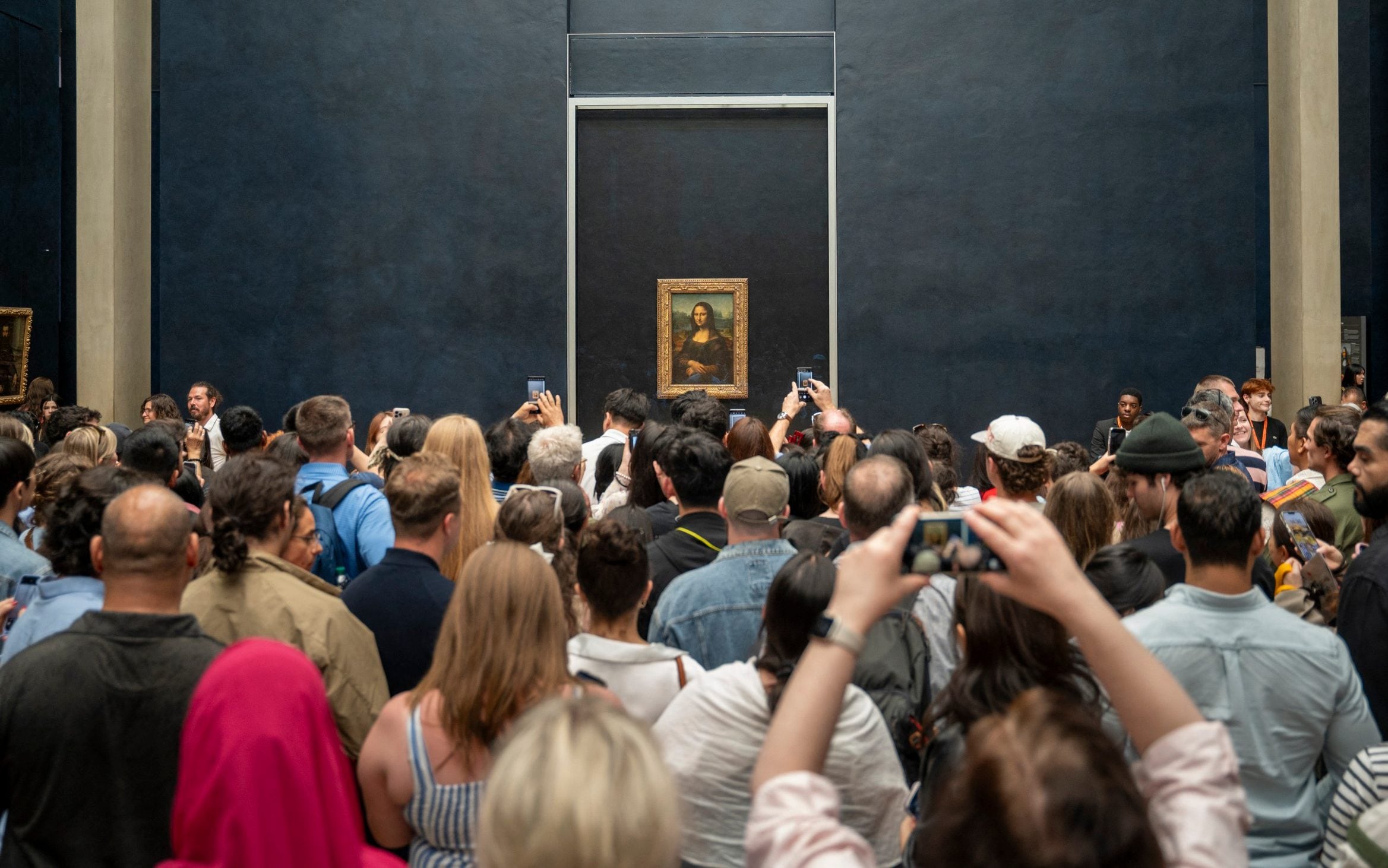
Occupying a former palace on the Right Bank of the Seine, the Louvre always attracts a lot of visitors, many of whom make a beeline for its most famous artwork: Leonardo da Vinci’s Mona Lisa. Yet last autumn’s heist generated negative headlines around the world, and there have been controversies concerning, among other issues, overcrowding, failing infrastructure and an expensive renovation masterplan. New director Christophe Leribault inherits an institution in disarray.
Design Pics RF/Getty
Masterpieces:Laocoön; Apollo Belvedere; Augustus of Prima Porta; Stanze of Raphael; Sistine Chapel; Michelangelo Merisi da Caravaggio, Deposition (1600-04)
Recent acquisitions: Nobili Collection: 64 self-portraits by 20th-century Italian artists
Plans: Modest, compared with those of its competitors; a second entrance announced by museum director Barbara Jatta almost a decade ago has not materialised
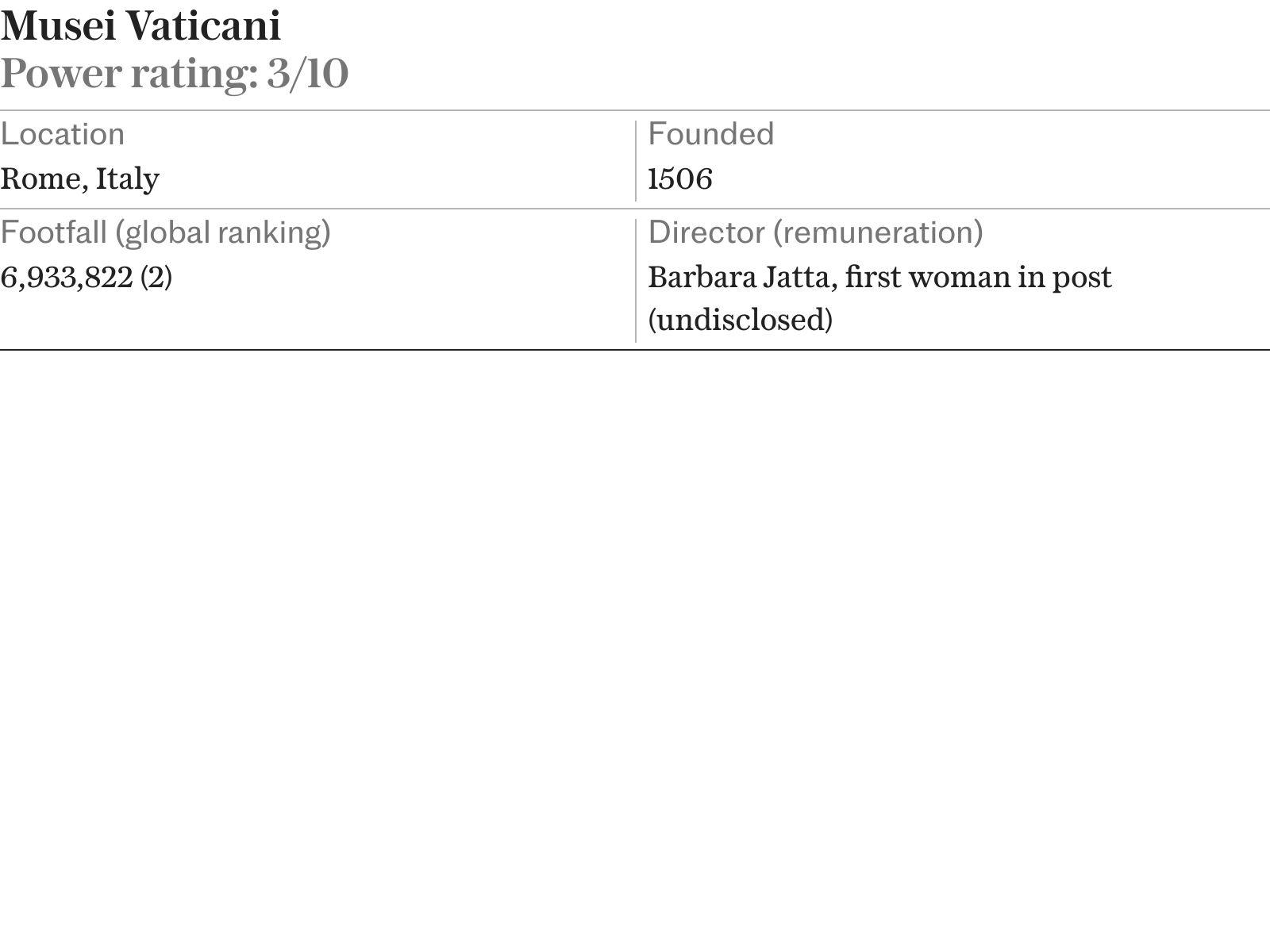
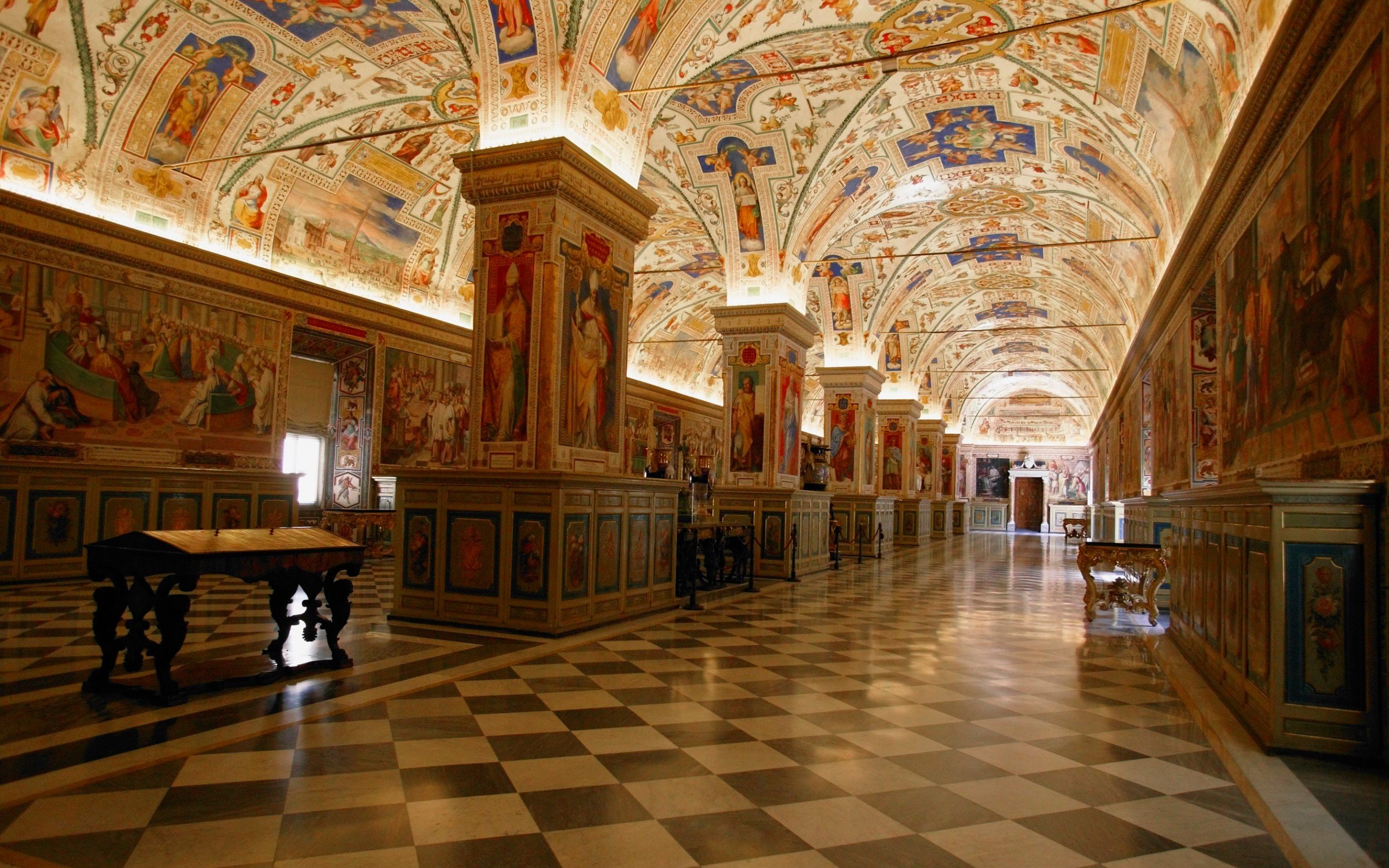
Visiting the Vatican Museums, founded by Pope Julius II, can be overwhelming: around 20,000 works amassed by the Catholic Church are arranged throughout a palace on the west bank of the Tiber; congestion is an issue. Still, for anyone wishing to get to grips with the Italian Renaissance, it can’t be beaten: the culmination of the visitor route is the Sistine Chapel, decorated with frescoes by Michelangelo (including, on the altar wall, The Last Judgment, recently restored). The connection with the papacy doesn’t make the institution immune from worldly troubles: in 2024, almost 50 employees complained of “unfair” and “poor” workplace conditions; recent acquisitions have underwhelmed.
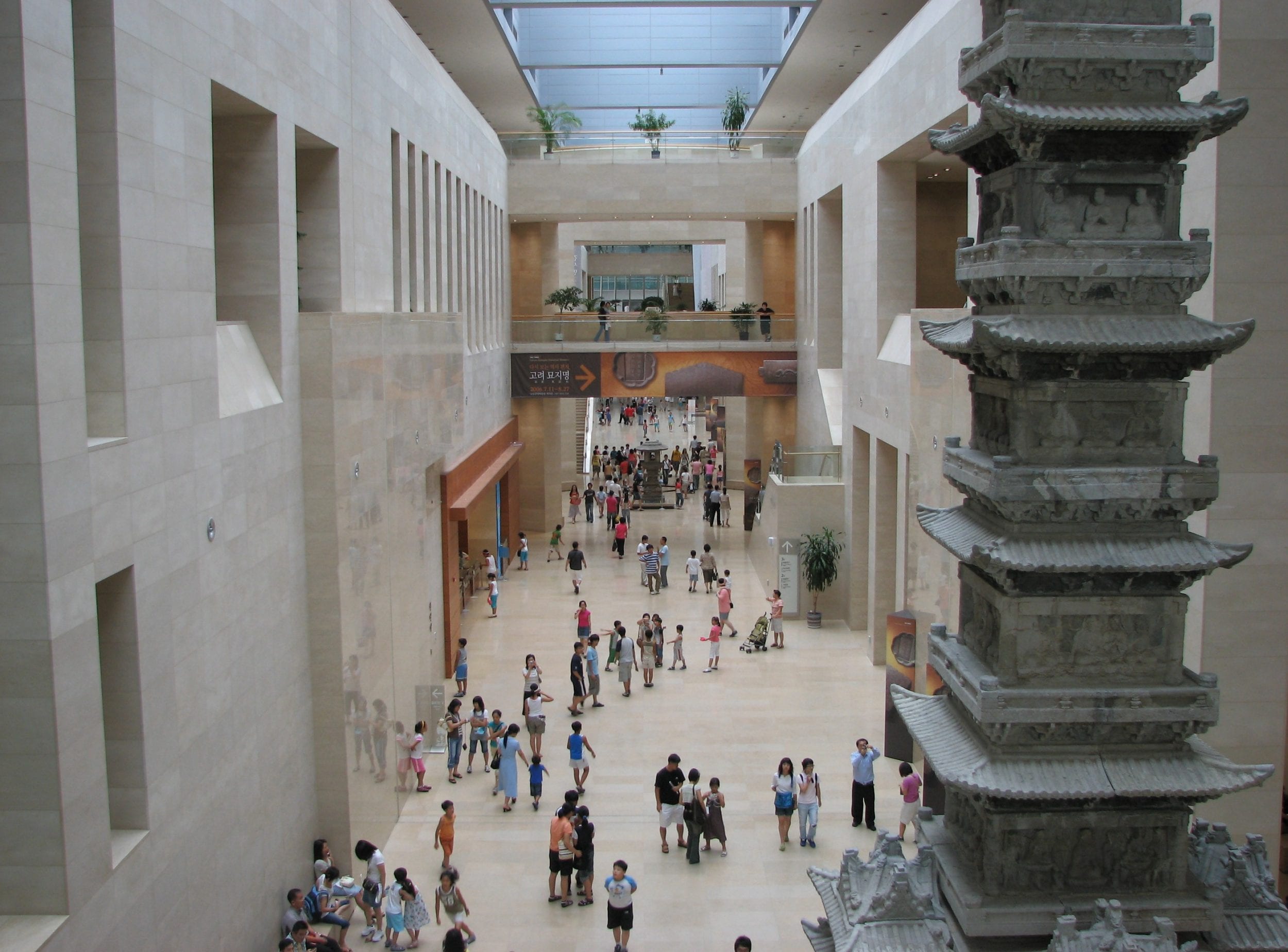
Ian Muttoo
Masterpieces:Pensive Bodhisattva (5th-6th century); 10-storey marble pagoda from Gyeongcheonsa Temple (1348); white porcelain Moon Jar (Joseon Dynasty)
Recent acquisitions: 21,600 items donated by the heirs of former Samsung chairman Lee Kun-hee
Plans: Nothing to write home about: the Korean Empire Gallery reopens on July 30, following refurbishment; visitor hours have been modified to “boost the quality of the viewing experience”, according to You Hong-jun
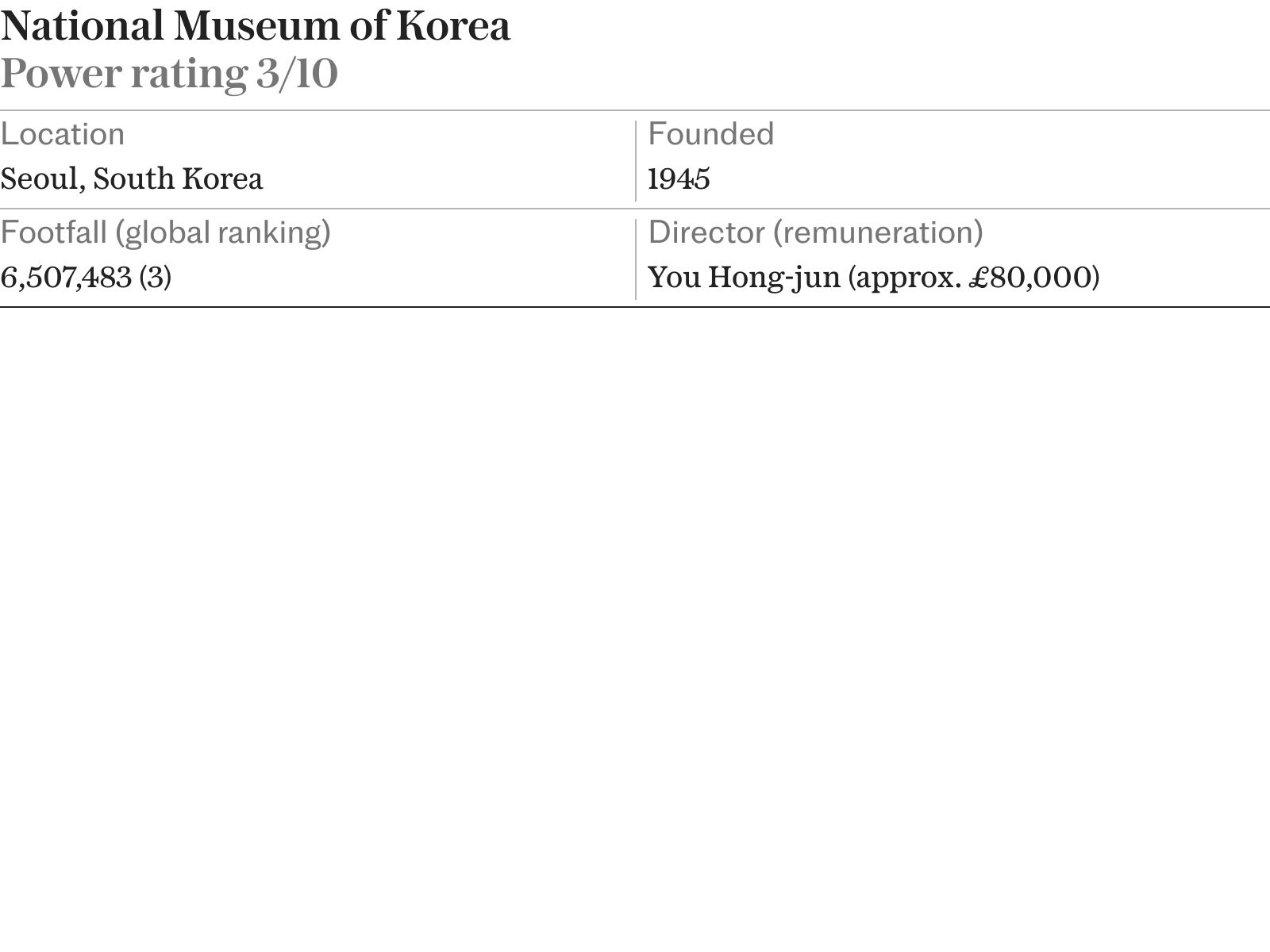
With a year-on-year increase in visitor numbers for its main venue of more than 70 per cent, the National Museum of Korea (which holds more than 420,000 artefacts from prehistory to today) was a surprise entry on The Art Newspaper’s latest list. One theory for its success is that the museum is surfing the so-called “Hallyu” or “Korean Wave” (that is, the global surge in popularity of South Korean culture since the 1990s), although a spokesman for the museum points to “innovative exhibition planning” and the integration of “advanced digital technologies”.
Jakub Porzycki/NurPhoto via Getty
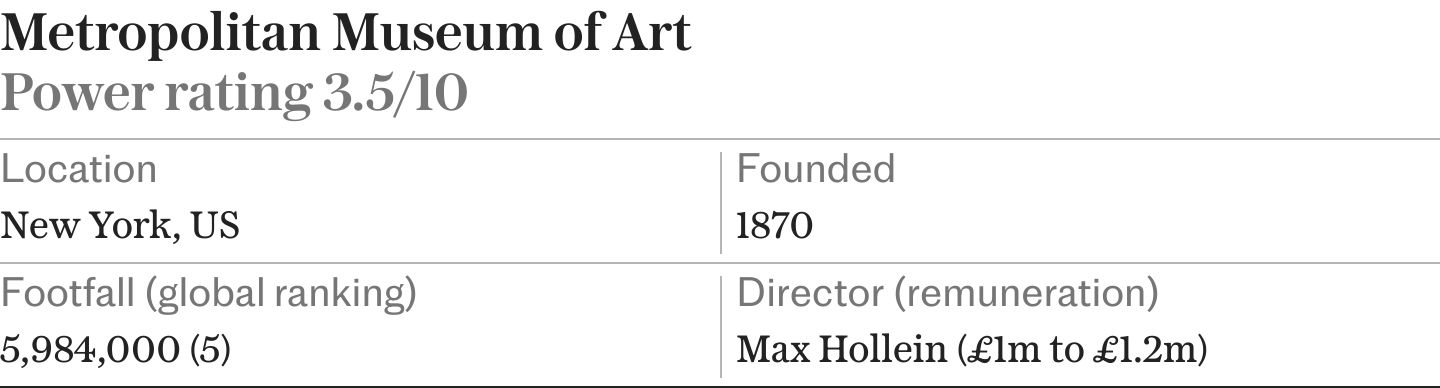
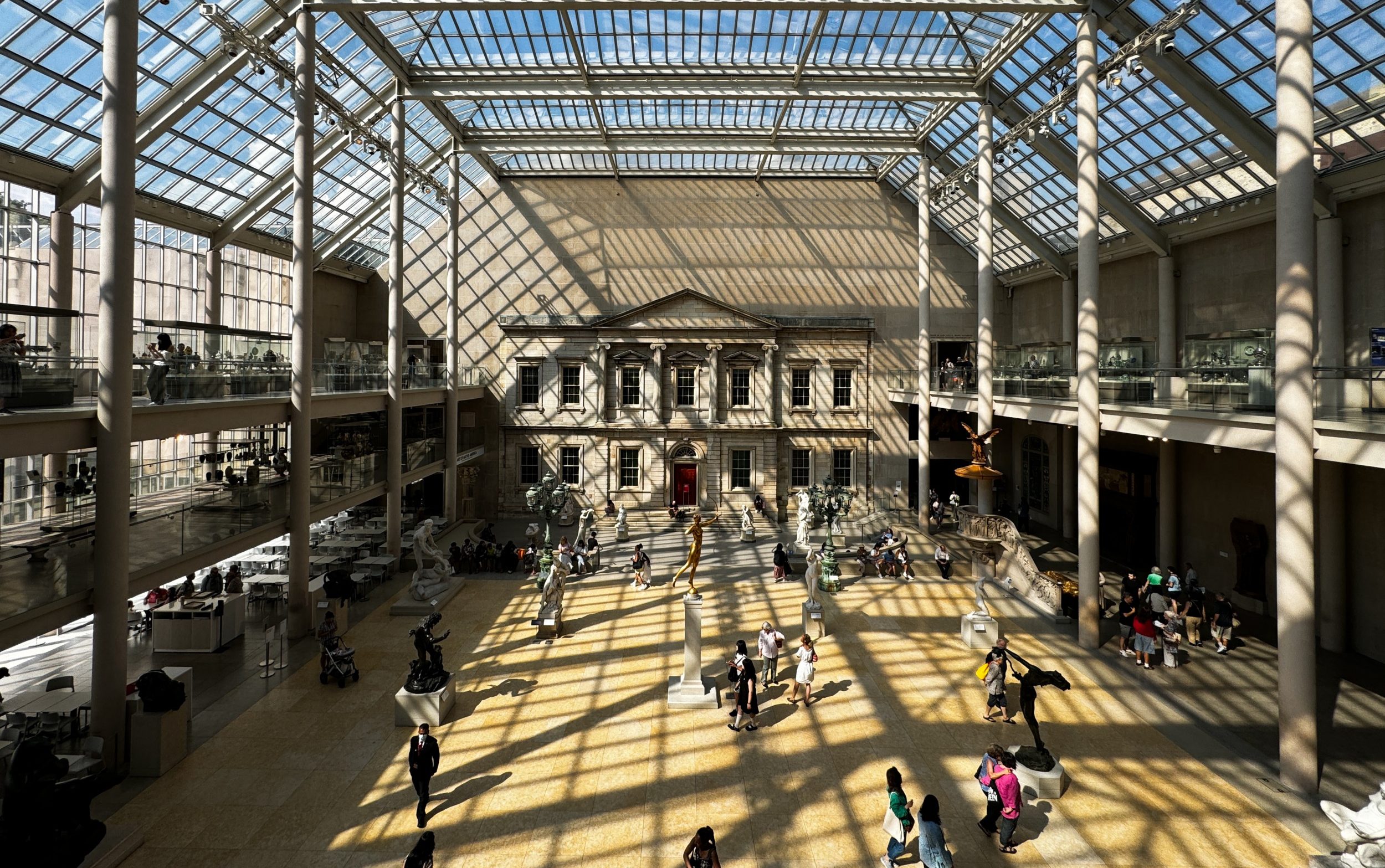
Masterpieces: Temple of Dendur; New York Kouros; Johannes Vermeer, Young Woman with a Water Pitcher (about 1662); John Singer Sargent, Madame X (1883-84); Jackson Pollock, Autumn Rhythm(Number 30) (1950)
Recent acquisitions: Wang Yuanqi, Streams and Mountains without End (about 1710); Helene Schjerfbeck, The Lace Shawl (1920); the promised gift of 188 Dada and surrealist works, by 37 artists, from the collection of Met trustee John Pritzker; Rosso Fiorentino, Madonna and Child with Saint John the Evangelist (1512-13)
Plans: Tang Wing: a new, five-storey home for 20th and 21st-century art designed by Mexican architect Frida Escobedo, due to open in 2030
Think of the Met, which occupies a vast building along Fifth Avenue on the eastern edge of New York’s Central Park, as a fusion of the British Museum and the National Gallery: with more than 1.5 million objects, its collection spans 5,000 years of history, and encompasses everything from Egyptian and Greco-Roman antiquities to first-rate European paintings (including modern and contemporary masterpieces). There have been recent controversies about, for instance, the provenance of items in the collection; this year, activists were pushing for a boycott of the annual Met Gala, to protest the involvement of American billionaire Jeff Bezos (although, says a spokesman, neither the guest list nor the amount being raised was affected).
Source: “AOL Money”
